Herbal Tinctures Explained: How They Work, How to Use Them & When to Reach for One
It's a regular scene: someone is at our farmers market booth curiously eyeing our tinctures, takes a pause, and asks, "...so how do I use these?"
Herbal tea is a known entity. Tinctures have proven more of a mystery (even the word itself is a little scary — it's pronounced TING-chur).
This guide is here to take the intimidation out of it, so you feel excited to bring these amazingly helpful tools into your life. We'll walk through how tinctures are different from tea, when each one makes sense, and how to figure out where to start.
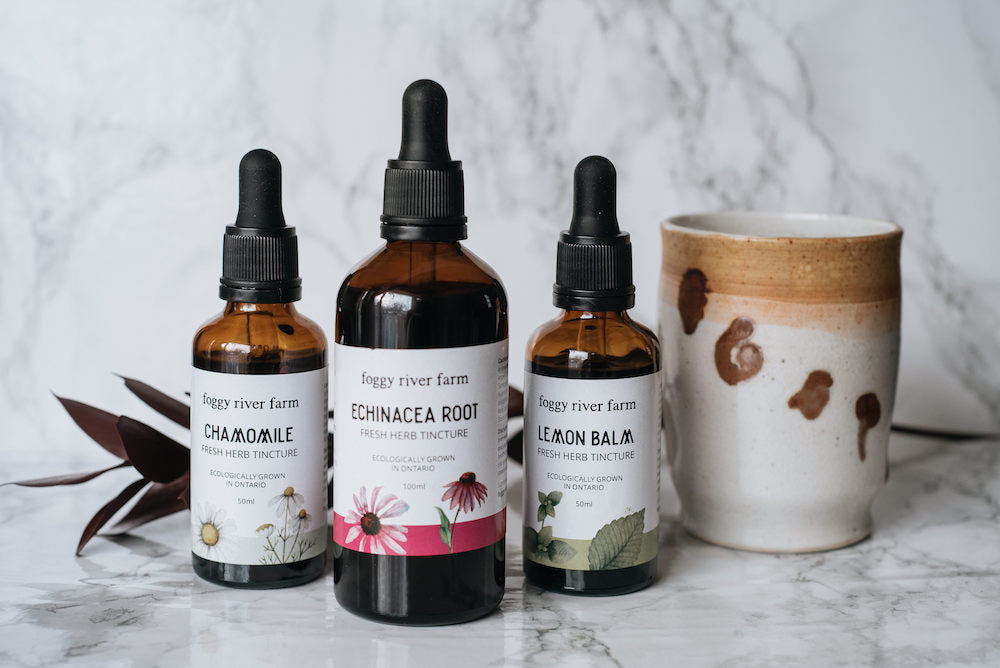
(Looking for products? Browse our Collection of Canadian Grown & Made Tinctures)
What Is a Herbal Tincture?
At its simplest, a herbal tincture is a concentrated, shelf-stable liquid extract made by steeping herbs in a solvent — usually alcohol. Over time, the solvent gently pulls specific compounds out of the plant and into the liquid, creating an extract you take internally in very small amounts (a teaspoon or less).
 Why the Solvent Matters
Herbs are complex. A single plant can contain dozens of different compounds, and not all of them dissolve the same way. That's where the solvent comes in. It's the thing that determines what actually makes it into your final bottle.
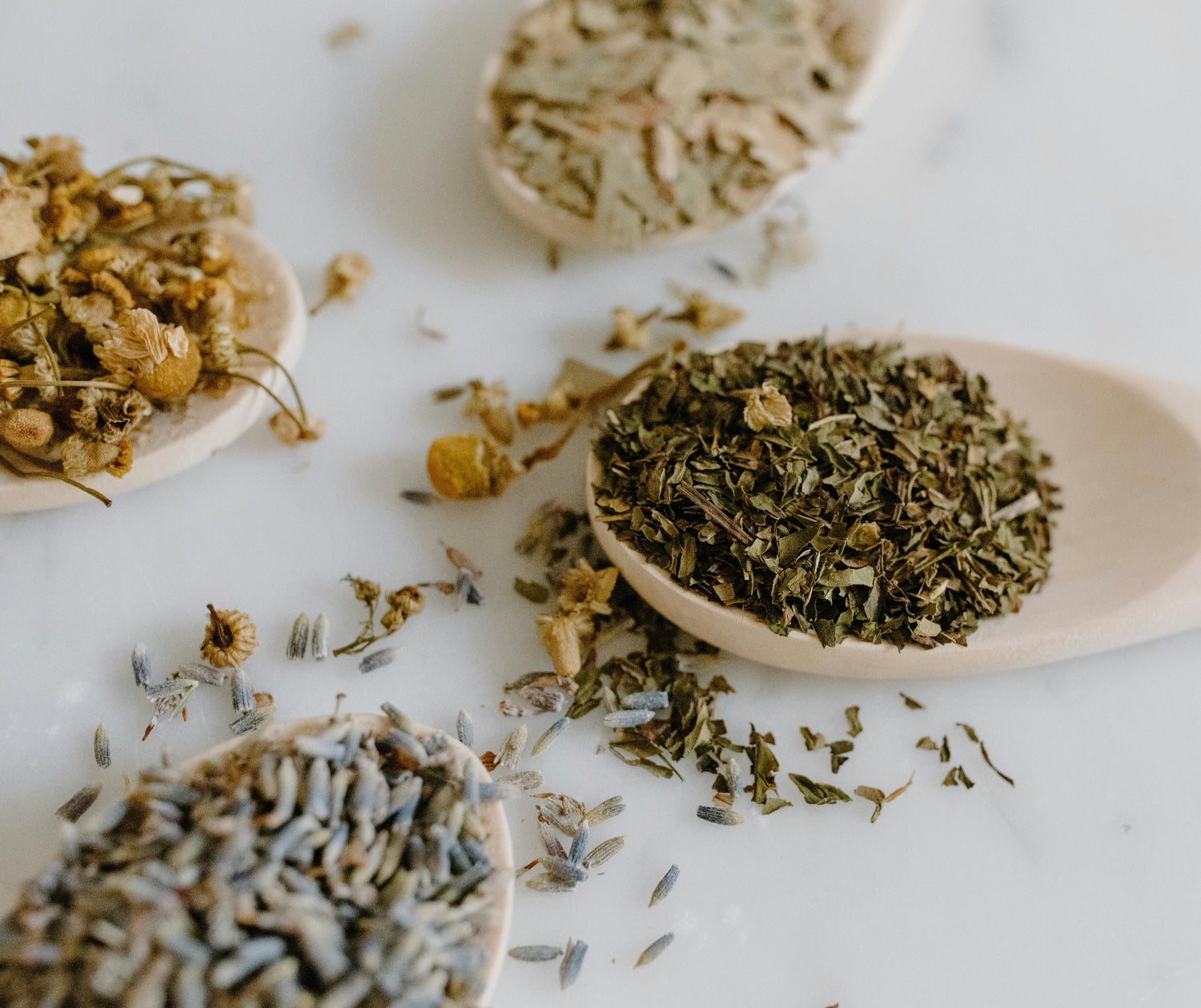
Water (Teas & Infusions)
Water is amazing at extracting lots of good stuff:
- Minerals
- Polysaccharides (soothing, moistening compounds)
- Some aromatic and bitter constituents
This makes teas and infusions especially well-suited for hydration, nourishment, and gentle daily support.
Alcohol (Tinctures)
Alcohol pulls at the plant from a different angle. It's able to draw out compounds that water can't easily touch — the alkaloids, resins, and bitter principles that give many herbs their strength. Combine that with a bit of water in the mix (most tinctures are actually a water-alcohol blend), and you end up with something that captures a broader spectrum of the plant's medicinal qualities. That's also what gives tinctures their concentration and their long shelf life.
Glycerin (Our Finishing Touch)
If you're avoiding alcohol entirely, a glycerite is worth knowing about too. It's a fully alcohol-free extract. It won't pull as wide a range of compounds as an alcohol-based tincture, but it's a solid option for anyone with a zero-tolerance need.
Tinctures vs Tea: What’s the Difference?
Drinking a cup of herbal tea and taking a tincture are not interchangeable experiences. Both have their place, and understanding the difference makes working with herbs feel a lot more intuitive.
- Tea relies on water and is typically consumed in larger volumes.
- Tinctures rely on alcohol (or glycerin) and are much more concentrated in a small amount of liquid.
Because different solvents draw out different compounds, a tincture can offer a different kind of support than tea, even when made from the same plant. Nettle tea VS nettle tincture have different uses!
In our home, we use both every day: tea for flavour, hydration, nourishment, and the ritual of sitting and relaxing; tinctures for quick support and higher potency. Tinctures are also our preferred choice for herbs that don't taste good as a tea.
Two Ways Herbal Tinctures Are Commonly Used
In practice, tinctures generally fall into two broad patterns of use. Understanding this distinction is the fastest way to figure out how and when to reach for one.
As-Needed Support
These might be taken occasionally, short-term, or at a particular time of day:
- Cold and flu season: Echinacea
- Before bed: Valerian Root
- Acute digestive upset: Peppermint
- When stress feels especially heavy: Lemon Balm
- A headache: Willow Bark
Daily or Ongoing Support
Other tinctures are chosen for steady, ongoing support — nourishing a system of the body, building resilience, or helping restore balance gradually. With these, consistency matters more than immediacy, and the effects tend to show up subtly, over weeks or months:
- Burnout recovery: Ashwagandha
- Immune strengthening: Astragalus
-
Nervous system nourishment: Milky Oats
Our full tincture collection is organized so you can browse by what you're looking to support.
How to Take a Tincture
Some tinctures taste lovely (we're obsessed with chamomile lately). Others are... not. The good news is you only need a little.
Dosage varies by plant, but you're typically looking at a few drops up to a teaspoon. Most tinctures can be taken:
- Directly under the tongue
- Diluted in a small amount of water, tea, or juice (a "shot")
- Added to sparkling water for a herbal mocktail (for the tasty ones)
Tip: If you're sensitive to alcohol, adding your tincture to warm (not boiling) water can soften the flavour and let some of the alcohol evaporate off.
 Newsflash: We're all different.
Everyone responds to herbs a little differently. Some people prefer to start at the lower end of the recommended dosage range and gradually increase, paying attention to how their body responds.
Don't Let the Dropper Bottle Scare You
Herbalism is personal. As you explore different ways to prepare and use herbs, you'll start to notice what suits you.
Tinctures are a key part of our own home apothecary. Most days, we take chamomile, lemon balm or valerian before bed as part of our wind-down routine. And over the years they've supported us through infections, illness, injuries, and heavy grief.
They're simply another tool we're grateful to have on hand, and we hope this guide has helped you feel more confident about where they might fit into your life.
Not sure where to start? A few of our most-reached-for bottles: Lemon Balm for stress, Valerian Root for sleep, and Peppermint for digestion cover a lot of the everyday stuff. Or browse the full collection — and if you're still unsure, reach out to us directly. We're always happy to help you find the right starting point.